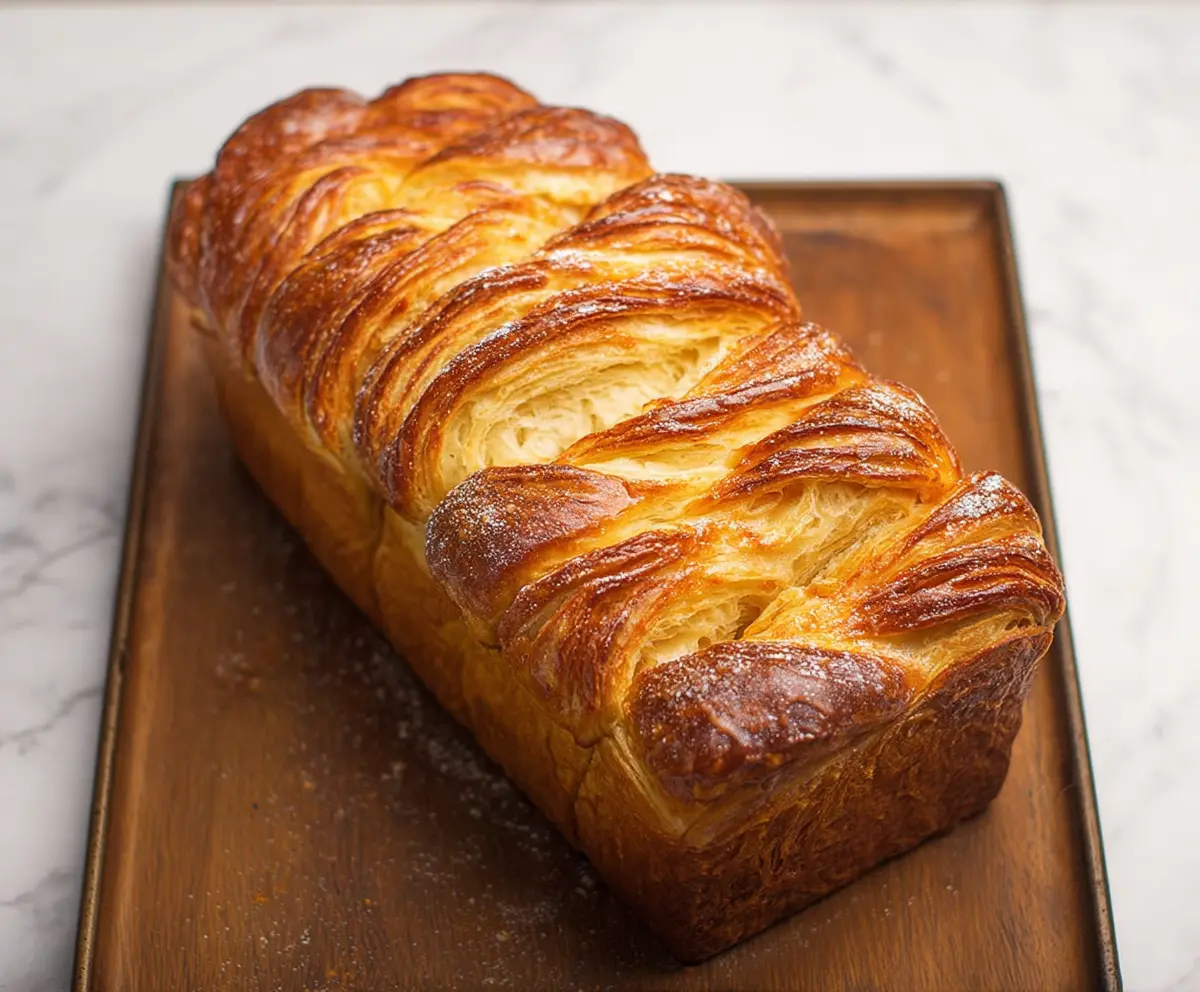
Croissant Bread Loaf is what happens when flaky, buttery croissants come together to make a soft, fluffy, and irresistible loaf. Imagine all that rich, layered goodness baked into one big, pull-apart bread that’s perfect for breakfast or snack time.
I love making this loaf because it feels fancy but is actually super simple to put together. The buttery layers get even better toasted or spread with a little jam or honey, and the smell while it’s baking? Pure comfort. It’s like having freshly baked croissants without the fuss of shaping each one.
This loaf works great sliced for sandwiches or just torn apart by hand with a cup of coffee or tea. It’s one of those recipes that everyone asks for again and again because it’s just so soft and satisfying. I think you’ll find it quickly becomes a favorite in your home too.
Key Ingredients & Substitutions
Flour: All-purpose flour works well here for a soft crumb. For a richer texture, try bread flour, which has more protein and helps develop gluten for a chewier loaf.
Butter (for laminating): Cold butter is key to creating flaky layers. European-style butter with higher fat content adds extra richness but regular unsalted butter is fine too.
Yeast: Active dry yeast is great, but instant yeast can be used for a quicker rise—just mix it directly with the flour. Fresh yeast is fine if you have it, just adjust quantities.
Milk: Whole milk gives tenderness and flavor, but you can swap with 2% or plant-based milk like oat or almond if preferred. Keep it warm for activating yeast.
How Can You Nail the Lamination Process for Flaky Layers?
Laminating dough means folding butter inside dough multiple times to create thin buttery layers. Here’s how to get it right:
- Keep everything cool: Cold butter and dough prevent melting and help keep distinct layers.
- Roll carefully: Roll gently to avoid butter breaking through dough—patch any tears quickly.
- Fold like a letter: Folding into thirds and chilling between turns lets the butter layer build up and dough rest.
- Be patient: Three turns with resting time is enough for good layers without overworking the dough.
- Use parchment: Parchment paper helps achieve an even butter block and prevents sticking when rolling.
Following these tips will help your loaf develop buttery, flaky textures with that beautiful layered pull-apart effect.

Equipment You’ll Need
- Stand mixer with dough hook – makes kneading easier and faster, especially for sticky dough.
- Rolling pin – essential for rolling out the dough thinly without breaking the butter layers.
- Parchment paper – helps shape and handle the butter block and prevents sticking during rolling.
- 9×5 inch loaf pan – perfect size to shape and bake the loaf evenly.
- Basting brush – for brushing the egg wash to get a shiny, golden crust.
Flavor Variations & Add-Ins
- Add cinnamon and sugar between layers for a sweet, spiced twist like cinnamon rolls.
- Stir in chopped nuts (walnuts or pecans) between layers for crunch and nutty flavor.
- Mix some grated cheese (Gruyère or cheddar) into the dough or layers for a savory version.
- For a fruity note, add dried cranberries or raisins between folded layers before baking.
How to Make Croissant Bread Loaf
Ingredients You’ll Need:
- 4 cups (500g) all-purpose flour
- 1/4 cup (50g) sugar
- 2 tsp salt
- 2 1/4 tsp (1 packet) active dry yeast
- 1 1/4 cups (300ml) whole milk, warm (about 100°F/38°C)
- 2 tbsp unsalted butter, melted
- 3/4 cup (170g) unsalted butter, cold and sliced thinly (for laminating)
- 1 large egg (for egg wash)
- Powdered sugar (optional, for dusting)
How Much Time Will You Need?
This recipe takes about 20 minutes of active prep time plus resting and rising time of around 4 to 5 hours total, including multiple chilling periods between laminating turns and proofing the loaf before baking.
Step-by-Step Instructions:
1. Prepare the Dough:
In a big bowl, mix the flour, sugar, salt, and yeast. Add the warm milk and melted butter. Knead the dough—by hand or mixer—until it’s smooth and elastic, about 8 to 10 minutes. The dough should be sticky but pull away from the bowl edges.
2. First Rise:
Put the dough in a greased bowl and cover it with plastic. Let it rise in a warm place until it doubles in size—about 1 to 1 1/2 hours.
3. Prepare Butter Block:
While the dough rises, place the cold, thin butter slices between parchment paper. Use a rolling pin to flatten it into a 7-inch square. Keep it cold in the fridge so it stays firm but pliable.
4. Roll Out Dough and Laminate:
Punch down the dough and roll it into a 10-inch square. Put the butter block in the center at a 45-degree angle. Fold each corner of the dough over the butter to cover it completely.
5. Roll and Fold (First Turn):
Roll the dough into a 20×10 inch rectangle carefully so the butter doesn’t break through. Fold it into thirds like a letter. Wrap it in plastic wrap and chill it for 30 minutes.
6. Second and Third Turns:
Repeat the rolling and folding two more times, chilling for 30 minutes between each turn to develop flaky layers.
7. Shape the Loaf:
After the final chill, roll the dough again into a 20×10 inch rectangle. Cut into 4 equal strips lengthwise. Stack these strips on top of each other, then cut the stack into 3 or 4 equal sections depending on your loaf pan size.
8. Arrange in Pan and Proof:
Grease a 9×5 inch loaf pan. Place the dough pieces standing up and a bit askew in the pan to create layered, pull-apart layers. Cover loosely and let rise until puffed and almost doubled, about 1 hour.
9. Egg Wash and Bake:
Preheat oven to 375°F (190°C). Beat the egg with a tablespoon of water and brush it over the loaf’s surface for a shiny crust. Bake for 30-40 minutes until golden brown. Use foil if it browns too fast.
10. Cool and Enjoy:
Let the bread cool in the pan 10 minutes, then transfer to a rack. Dust with powdered sugar if you like. Serve fresh, toasted, or as a sandwich base!
Can I Use Frozen Butter for Laminating?
It’s best to use cold, but not frozen, butter for laminating. If your butter is frozen, let it thaw slightly in the fridge until pliable but still cold before rolling it into a block.
Can I Make the Dough Ahead of Time?
Yes! You can prepare the dough and do the first rise the night before, then refrigerate it overnight. Let it warm slightly before laminating and continuing with the recipe.
How Should I Store Leftover Croissant Bread Loaf?
Store leftovers in an airtight container or wrapped tightly at room temperature for up to 2 days. For longer storage, freeze slices in a sealed bag and toast or warm them before serving.
What’s the Best Way to Reheat Croissant Bread Loaf?
Reheat slices in a toaster or oven at 350°F (175°C) for 5–7 minutes to restore crispness and freshness. Avoid microwaving as it can make the bread soggy.